

Binance Withdrawal Guide 2024: How to Withdraw Crypto & Fiat Safely

What is Binance Withdrawal and Why is it Important?
Binance withdrawal refers to the process of moving your digital assets—cryptocurrencies like Bitcoin, Ethereum, or stablecoins—or traditional fiat money out of your Binance exchange account to an external wallet or bank account. This is a fundamental action for any crypto user, marking the transition from trading on an exchange to truly "owning" your crypto by securing it in a private wallet, or cashing out to your local currency. Understanding how to execute a Binance withdrawal safely and efficiently is crucial for asset security, portfolio management, and financial flexibility. This guide provides a comprehensive overview, covering everything from basic steps to advanced security tips and troubleshooting common issues.
Step-by-Step: How to Withdraw Cryptocurrency from Binance
Withdrawing crypto from Binance is a straightforward process, but attention to detail is paramount to avoid costly mistakes. First, log into your Binance account and navigate to the "Wallet" section, then select "Fiat and Spot." Click on "Withdraw." You will then choose the cryptocurrency you wish to withdraw (e.g., BTC, ETH, USDT). The most critical step is entering the withdrawal address. This is the public address of your external wallet. Always double-check this address; a single wrong character will result in permanent loss of funds. It's highly recommended to use the address whitelist feature for added security. Next, select the network (e.g., Bitcoin network for BTC, ERC20 for ETH on Ethereum). Ensure the chosen network matches the network supported by your receiving wallet. Finally, enter the amount, review the transaction fee, and confirm the withdrawal via email and 2FA authentication.
Understanding Withdrawal Networks and Fees
A common point of confusion for new users is selecting the correct withdrawal network. When you withdraw a coin like USDT, Binance may offer multiple network options: Tron (TRC20), Ethereum (ERC20), or Binance Smart Chain (BEP20). Each network has different transaction speeds and fees. TRC20 withdrawals often have very low fees, while ERC20 fees can be higher due to Ethereum network congestion. The key rule is that the sender (Binance) and the receiver (your external wallet) must use the exact same network. Sending USDT via the ERC20 network to a wallet that only supports TRC20 will result in lost funds. Binance withdrawal fees are dynamic and vary by asset and network. These fees cover the blockchain transaction cost and are not set by Binance arbitrarily. Always check the fee schedule on the withdrawal page.
How to Withdraw Fiat Money from Binance to Your Bank
Withdrawing fiat currency, such as USD, EUR, or GBP, from Binance to your bank account is a vital function for converting crypto profits into spendable money. The process begins by going to "Wallet" > "Fiat and Spot" > "Withdraw" and selecting the fiat currency. You must have a verified payment method linked, such as a bank card or a bank account via a supported payment partner (like SEPA for Europe or Fedwire for the US). Follow the on-screen instructions to enter your bank details and the amount. Binance typically processes fiat withdrawals within one business day, but the final arrival time depends on your bank. Be aware of any minimum withdrawal amounts and potential processing fees, which are usually lower than crypto network fees.
Common Binance Withdrawal Problems and Solutions
Users sometimes encounter hurdles during the Binance withdrawal process. A frequent issue is the withdrawal being "Pending" or "Processing" for an extended period. This can be due to network congestion, Binance's security review (especially for large amounts), or incomplete account verification. Ensure your account is fully verified (KYC completed) and that you have enabled all necessary security features. Another common problem is the "Address is invalid" error, which occurs if the wallet address format is wrong for the selected network. Always copy and paste the address instead of typing it manually. If a transaction fails or gets stuck, do not panic; contact Binance Support directly through the app or website with your transaction ID for assistance.
Essential Security Tips for Safe Binance Withdrawals
Security should be your top priority when handling withdrawals. First and foremost, enable Two-Factor Authentication (2FA) using an authenticator app like Google Authenticator—never rely solely on SMS 2FA. Utilize Binance's "Address Whitelist" feature, which only allows withdrawals to pre-approved wallet addresses, adding a powerful layer of protection against hackers. Always double-check the wallet address and network before confirming. Be wary of phishing sites; always access Binance by typing the official URL directly. For large withdrawals, consider doing a small test transaction first to verify everything is set up correctly. Finally, for long-term storage, withdraw your crypto to a secure hardware wallet, not an exchange-based wallet.
Binance Withdrawal Limits and Verification Levels
Your ability to withdraw funds from Binance is directly tied to your account verification level. Unverified accounts have very low or zero withdrawal limits. Completing Basic Verification (providing name and ID) significantly increases your 24-hour withdrawal limit. For the highest limits, especially for fiat withdrawals, you may need to complete Advanced Verification, which can include providing proof of address. You can check your current limits in the "Account" section under "Verification." These limits are in place to comply with global financial regulations and to protect user accounts from unauthorized draining in case of a security breach. If you need a temporary limit increase for a specific transaction, you can sometimes contact Binance support with a valid reason.
Comparing Withdrawals: Binance vs. Other Crypto Exchanges
When considering where to trade, withdrawal policies are a key differentiator. Binance is known for its wide selection of supported cryptocurrencies and networks for withdrawal, often offering multiple low-fee options like the BEP20 or TRC20 networks. Its withdrawal fees are generally competitive, though for Bitcoin withdrawals, some exchanges might occasionally offer lower fees. The speed of Binance withdrawals is typically fast for crypto, often processed within minutes, while fiat withdrawal speed depends heavily on the local banking partner. Compared to some decentralized exchanges (DEXs), Binance offers a more user-friendly fiat off-ramp. However, for pure crypto withdrawals to a private wallet, the process is largely similar across major centralized exchanges, with security and fee structure being the main comparison points.
Conclusion: Mastering Your Asset Movement on Binance
Successfully navigating Binance withdrawals is an essential skill for any participant in the cryptocurrency ecosystem. Whether you're moving crypto to a private wallet for safekeeping, sending funds to another person or service, or cashing out profits to your bank account, following the correct procedures ensures your assets remain secure. Remember the golden rules: always verify the receiving address and network, use all available security features like 2FA and address whitelisting, and start with a small test transaction if you're unsure. By understanding the fees, limits, and potential pitfalls outlined in this guide, you can execute Binance withdrawals with confidence and full control over your digital wealth.
“Binance Withdrawal Guide 2024: How to Withdraw Crypto & Fiat Safely” 的相关文章
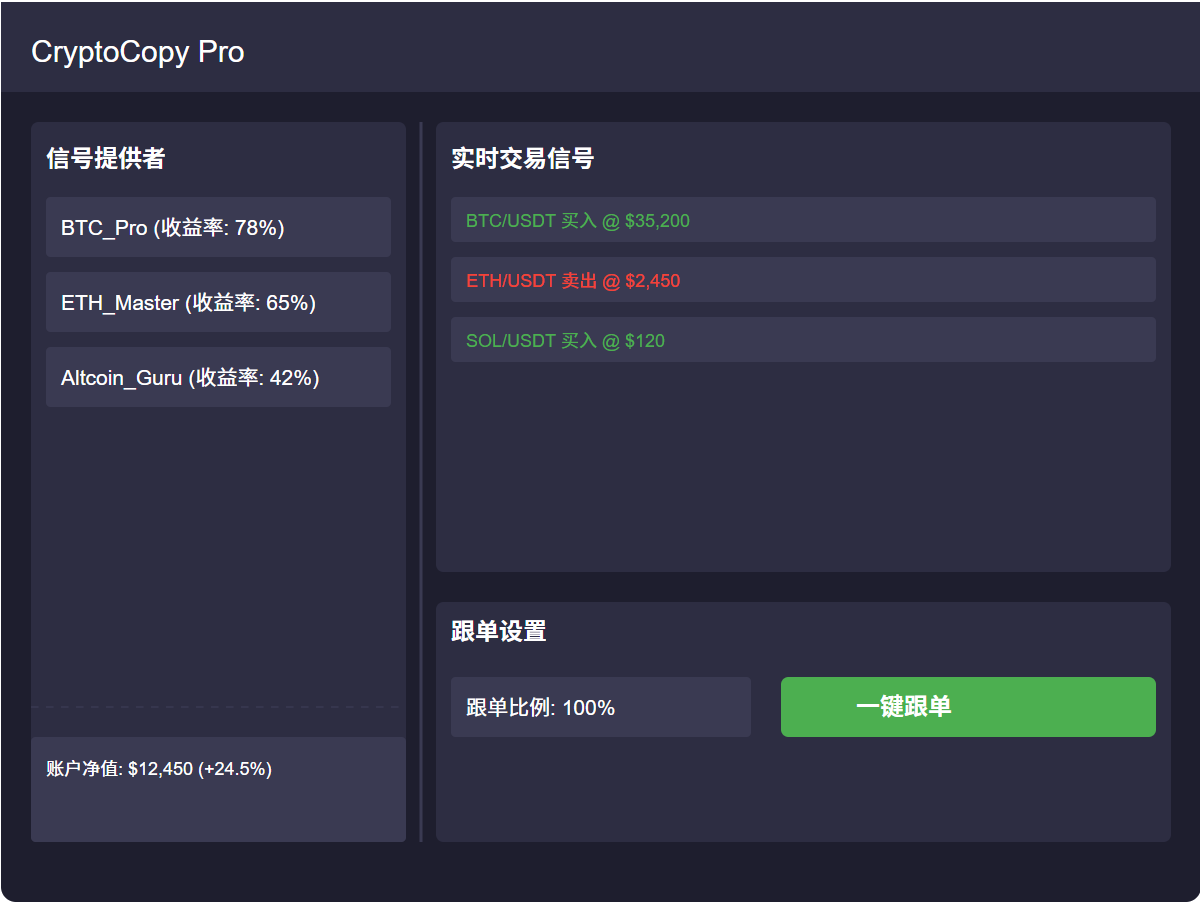
一键跟单平台 - 虚拟货币智能交易解决方案
一键跟单平台:虚拟货币交易的新时代解决方案在快速发展的虚拟货币市场中,一键跟单平台正成为越来越多投资者的首选工具。这种创新的交易方式让普通投资者也能轻松复制专业交易者的操作,无需深厚的市场分析能力即可参与加密货币投资。一键跟单平台的核心优势虚拟货币市场的高波动性既带来机会也伴随风险,一键跟单平台通过...
金沙入链:BSGM_携手_Streamex,打造受监管的实物资产代币化新纪元
金沙入链:BSGM 携手 Streamex,打造受监管的实物资产代币化新纪元标签: RWA 代币化 FINRA SEC 经纪自营商 金融合规 纳斯达克 黄金代币目录· 传统与未来的融合:BSGM 的战略新篇章· 牌照的金色钥匙:开启受监管的 RWA 蓝海· 先发制人的野...
以太坊“安全”扩容之路;V_神力挺,Gas_上限悄然提升
以太坊“安全”扩容之路:V 神力挺,Gas 上限悄然提升以太坊 区块链 扩容 Gas限制 验证者 Vitalik Buterin 去中心化目录· Gas 上限的悄然提升:以太坊的“提速”尝试· Gas 限制的奥秘:速度与去中心化的平衡艺术· V 神的“安全”背书:技术革...
数字资产对冲策略:全面指南与风险管理
数字资产对冲策略:全面指南与风险管理什么是对冲对冲策略对冲工具案例分析风险考量在高度波动的数字资产市场中,对冲策略已成为投资者保护资本的重要工具。本文将全面解析数字资产对冲的各种方法,帮助您在加密货币投资中有效管理风险。什么是数字资产对冲?数字资产对冲是指通过建立相反或相关的头寸,来抵消主要投资可能...
Web3 跟单工具:去中心化时代的智能投资助手
Web3 跟单工具:去中心化时代的智能投资助手概念解析核心特性主流平台运作流程独特优势未来展望Web3跟单工具的概念解析Web3跟单工具是基于区块链技术构建的去中心化社交投资平台,它允许普通投资者自动复制专业交易者的操作,同时保障资金自主控制权。这类工具代表了传统跟单系统向去中心化金融(DeFi)领...
数字移民的“窄门”;黄金签证收紧,加密富豪的全球迁徙之路何去何从?
数字移民的“窄门”:黄金签证收紧,加密富豪的全球迁徙之路何去何从?标签: 黄金签证 加密货币投资 居留权 税务规划 全球公民身份目录:· 序章:一张护照,万金难求的吸引力· 黄金签证:曾经的“通行证”· 欧盟的围堵:马耳他、塞浦路斯与保加利亚的落幕· 政府的考...