

How Much Money Does Binance Make? A Deep Dive into the Crypto Exchange's Revenue & Profits

In the volatile world of cryptocurrency, one name consistently dominates headlines and trading volumes: Binance. A common question from investors, enthusiasts, and skeptics alike is, "Has Binance exchange made a lot of money?" The short answer is a resounding yes. Binance is not just profitable; it has been one of the most financially successful companies in the entire digital asset industry since its launch. This overview explores the key drivers behind Binance's massive revenue, its primary income sources, and how it compares to traditional financial giants.
Binance's Staggering Revenue: By the Numbers
While Binance is a private company and does not disclose detailed quarterly financials like public corporations, estimates from industry reports and its own occasional disclosures paint a picture of immense profitability. In 2021, at the peak of the crypto bull market, it was estimated that Binance generated over $20 billion in revenue. Even during the crypto winter of 2022, the exchange reportedly brought in around $12 billion. To put this in perspective, these figures often surpassed the annual revenue of established traditional stock exchanges like the London Stock Exchange Group. Binance's profitability stems from its sheer scale, commanding roughly half of the global spot trading volume in crypto for extended periods. This market dominance directly translates into colossal fee income.
Where Does Binance's Money Come From? Key Revenue Streams
Binance's financial engine is powered by a diversified suite of services, far beyond simple spot trading. Its primary revenue sources include:
1. Trading Fees: This is the core. Binance charges a small fee on every trade (typically 0.1% for makers and takers, with discounts for using its native BNB token). Given its trillions in annual trading volume, these tiny percentages compound into billions.
2. Futures and Derivatives Trading: A major profit center. Fees from leveraged perpetual contracts and futures, which attract high-frequency and institutional traders, contribute a significant portion of revenue, often during periods of high market volatility.
3. Staking and Earn Programs: Binance offers users ways to earn interest on their idle crypto assets. The exchange aggregates user funds, stakes them on various blockchain networks, and keeps a portion of the rewards as revenue.
4. Launchpad and Launchpool: Platforms for new token sales. Projects pay substantial sums to launch on Binance, and users lock their assets to participate, creating engagement and fee opportunities.
5. Venture Investments (Binance Labs): The exchange's investment arm takes early stakes in hundreds of crypto startups. The appreciation of these portfolios, though not direct revenue, adds immense value to the company's balance sheet.
6. Withdrawal and Network Fees: Users pay small fees for withdrawing assets, and Binance manages blockchain network costs, sometimes retaining a spread.
Comparing Wealth: Binance vs. Traditional Financial Institutions
When asking if Binance has made "a lot of money," context is key. Compared to the largest global banks like JPMorgan Chase or investment giants like BlackRock, Binance's revenue is smaller. However, for a company founded in 2017, its growth trajectory and profit margins are unprecedented. Binance achieved scale and profitability in a fraction of the time it took traditional exchanges to build their empires. Its asset-light, global, and digitally-native model allows for extremely high margins, as it doesn't maintain the same physical infrastructure or regulatory overhead as legacy banks—though this latter point is changing rapidly.
The Impact of Regulation and Legal Challenges on Profits
No discussion of Binance's finances is complete without addressing regulatory scrutiny. In 2023, Binance agreed to a historic $4.3 billion settlement with U.S. authorities. While this was a massive financial penalty, analysts noted that the company's ability to pay it underscored its vast accumulated wealth. Moving forward, compliance costs, licensing fees, and a potential shift away from ultra-high-margin products like derivatives in certain regions will impact profitability. The exchange's future revenue may grow more slowly but could become more stable as it seeks to operate as a regulated financial entity worldwide.
Is Binance's Profit Model Sustainable Long-Term?
Binance's revenue is tightly coupled with crypto market cycles. Bull markets bring explosive trading volume and fee income, while bear markets test its resilience. The exchange's strategy for sustainable wealth involves diversification: expanding into regulated entities (like Binance US, Binance France), building out decentralized infrastructure (BNB Chain), and deepening offerings in payment solutions, NFT marketplaces, and educational content. Its success will depend on navigating regulation, maintaining user trust amidst competition, and continuing to innovate beyond just being a trading venue.
In conclusion, Binance has not just made "a lot of money"; it has generated wealth on a scale that redefines success in the fintech and crypto sector. From billions in trading fees to a sprawling ecosystem of services, its financial power is a direct result of capturing the lion's share of the global crypto market. While facing headwinds from regulation and market cycles, Binance's immense profitability to date is undeniable, solidifying its position as a financial powerhouse of the digital age.
“How Much Money Does Binance Make? A Deep Dive into the Crypto Exchange's Revenue & Profits” 的相关文章
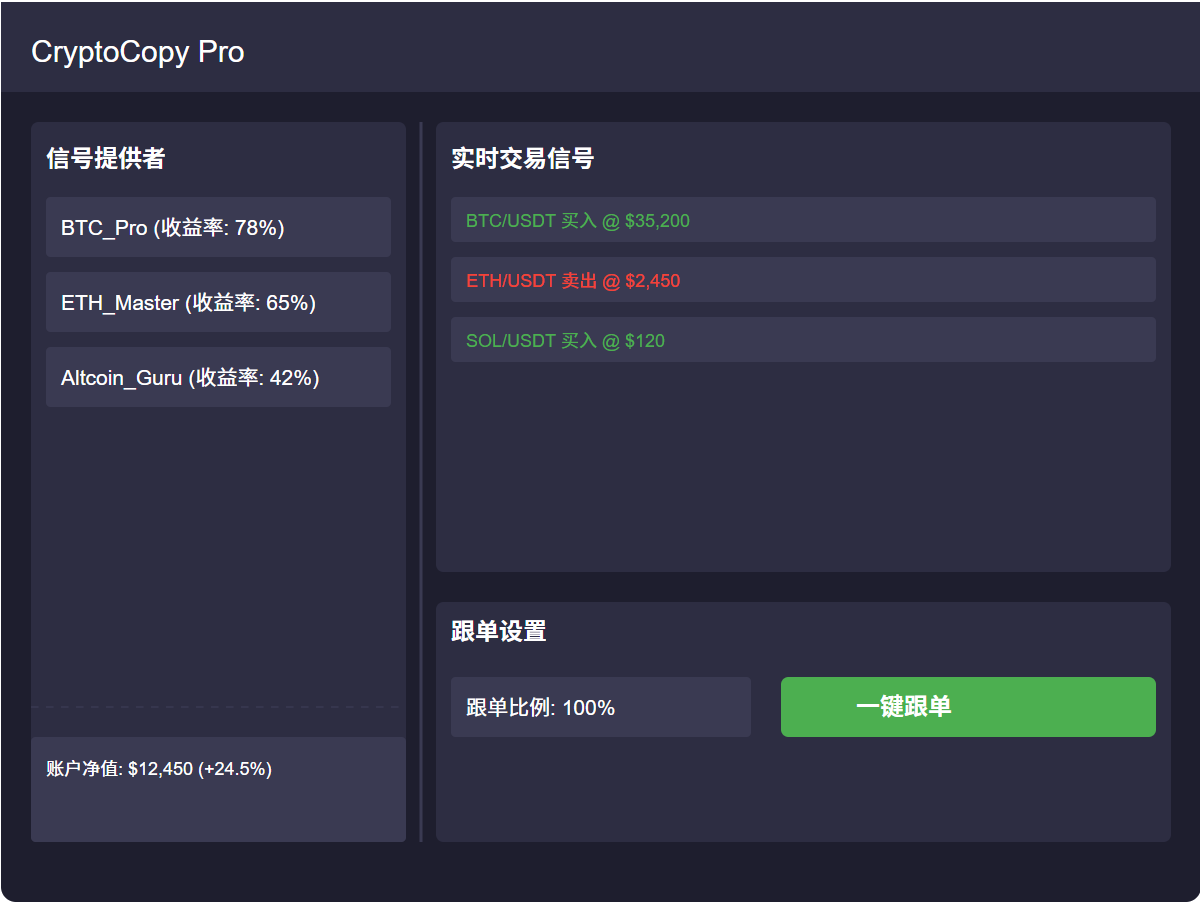
一键跟单平台 - 虚拟货币智能交易解决方案
一键跟单平台:虚拟货币交易的新时代解决方案在快速发展的虚拟货币市场中,一键跟单平台正成为越来越多投资者的首选工具。这种创新的交易方式让普通投资者也能轻松复制专业交易者的操作,无需深厚的市场分析能力即可参与加密货币投资。一键跟单平台的核心优势虚拟货币市场的高波动性既带来机会也伴随风险,一键跟单平台通过...
洞察先机;加密货币现货交易者如何利用期货市场数据
洞察先机:加密货币现货交易者如何利用期货市场数据加密货币 期货市场 现货交易 市场分析 价格预测 交易策略 风险管理目录· 拨开迷雾:期货合约的本质与魅力· 未来的线索:期货市场如何指引现货方向?· 基差的秘密:市场情绪的晴雨表· 波动性的低语:预判市场风暴的...
比特币交易过程详解 | 从创建钱包到完成交易的全流程指南
比特币交易过程详解 | 从创建钱包到完成交易的全流程指南body { font-family: 'Arial', sans-serif; line-height: 1.6; color: #333;...
比特币资金费率详解 | 永续合约价格锚定的核心机制
比特币资金费率:永续合约市场的关键机制更新时间:2025年7月27日 | 作者:加密货币衍生品分析师什么是比特币资金费率?比特币资金费率是永续合约市场中特有的机制,用于确保合约价格与标的资产现货价格保持长期一致。与传统期货合约不同,永续合约没有到期日,资金费率机制替代了传统的到期结算方式。资金费率的...
巨人的博弈与数字黄金的舞蹈;当全球政治遇上加密狂潮
巨人的博弈与数字黄金的舞蹈:当全球政治遇上加密狂潮目录:· 序: 风云际会,币市的晨曦· 贸易协定:一纸协议,万亿波澜· 巨鲸浮现:神秘交易的涟漪· 链上数据:揭示深层力量· 市场情绪:博弈者的猜想· 以太坊:独舞的精灵· 黄金:...

颠覆华尔街的数字浪潮;DeFi究竟是什么,以及它如何重塑我们的金融未来?
颠覆华尔街的数字浪潮:DeFi究竟是什么,以及它如何重塑我们的金融未来?标签: DeFi 去中心化金融 以太坊 区块链 智能合约 投资目录:· 序章:传统金融的“数字叛逆者”· DeFi的本质:一个无银行的金融世界· 为什么DeFi至关重要?· DeFi的诱人...